By Tessa Kelly, Lab Manager, The Dairy Authority
Reproductive efficiency is the cornerstone of a successful dairy herd. Pregnancy diagnosis to quickly and accurately identify open animals allows dairy managers to service animals again in a timely manner.
All of the veterinarians at The Dairy Authority (TDA) provide traditional palpation services, and also use ultrasound equipment to diagnose pregnancies. But it is often more efficient to utilize lab-based technology using blood or milk samples as a sole or tandem pregnancy diagnostic tool.
Our TDA Laboratory Services provide options for both blood- and milk-based pregnancy diagnosis, including:
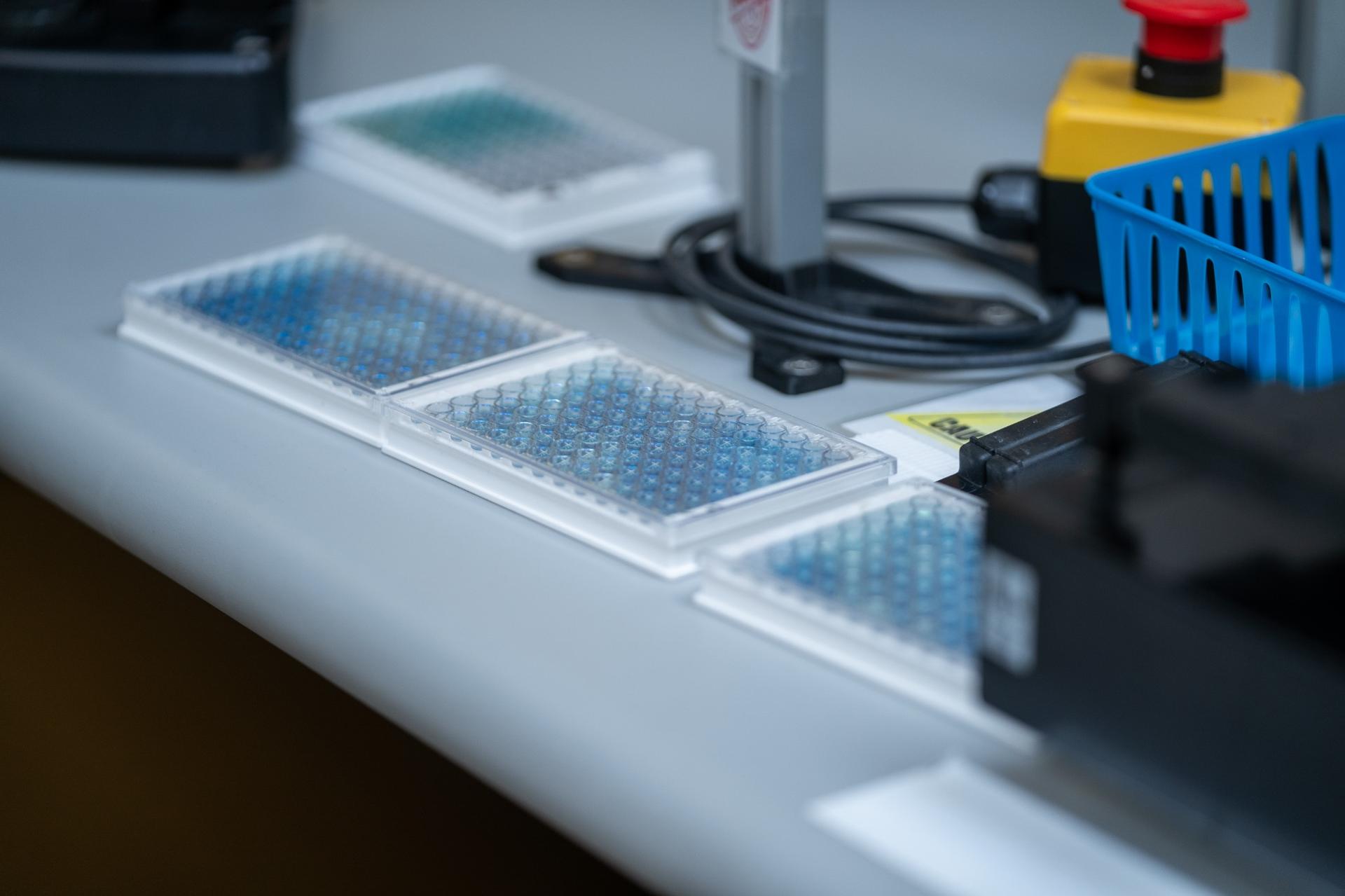
- BioPRYN®Blood Pregnancy Test – This blood-based pregnancy test gets the “PRYN” in its name as an acronym for “Pregnant Ruminant Yes/No.” It evaluates blood for the presence of Pregnancy Specific Protein B (PSPB), a protein produced by the placenta of a growing fetus. BioPRYN testing can be performed on cattle, sheep, goats, bison, deer, elk, and yaks – essentially any ruminant animal. The samples are evaluated using enzyme-linked immunosorbent assay (ELISA) testing. Heifers can be accurately evaluated 25 days post-breeding. Cows must be 28 days post-breeding and at least 73 days post-calving to ensure the test does not detect PSPB from the previous pregnancy. Our lab runs BioPRYN tests every day, Monday through Friday. Samples received before 12:00 noon will have results the following day.
- Alertys®Ruminant Pregnancy Test – This blood-based pregnancy test also uses the ELISA technique. It screens for pregnancy-associated glycoproteins (PAGs), which are proteins produced consistently by a developing embryo or fetus. It too can be used in all ruminant species. Cows and heifers must be at least 28 days post-breeding, but cows only need to be 60 days post-calving for accurate results with this test. Results from this test are also available in 24-48 hours during business days, depending on the time we receive the sample.
- Alertys®Milk Pregnancy Test – Like the blood-based Alertys test, this test also diagnoses pregnancy based on the presence of PAGs, but in milk samples rather than blood. Many dairies like the labor efficiency and less-invasive benefits of sampling milk versus blood, and pregnancy testing can be ordered as a part of processing a herd’s regular DHIA milk samples in our lab. Like its blood-based counterpart, this test requires cows and heifers to be at least 28 days post-breeding, and cows 60 days post-calving. We currently run these tests twice per week and results take 48 hours to secure, so test turn-around time could be up to one week.
All three of these tests are proven to deliver more than 98.6% accuracy. It is important to note that early embryonic death or abortion may produce a positive test due to the pregnancy markers still being present in the animal’s system. These tests only provide confirmation of pregnant or open status; they cannot detect gestation age, sex of the fetus, or twin pregnancies.
It is important to have a precise on-farm system in place when collecting and identifying samples for lab-based pregnancy tests. Samples that are mismarked or out of order could produce the highly unfortunate circumstance of pregnant cows receiving prostaglandin shots.
Proper sample preparation also helps ensure accurate results. For blood samples, we prefer about half the volume of a red-topped vacuum tube or at least 1 mL of blood. A similar volume of milk is needed for the milk-based test.
When drawing blood samples, use a separate needle for each animal to avoid cross-contamination. An excellent video demonstrating extraction of a blood sample from the underside of the tail can be viewed here. Milk samples should be collected using aseptic sample collection guidelines.
Ship blood samples with ice packs and carefully package them to avoid breakage or spillage. Milk samples can either be shipped with ice packs or treated with a preservative tablet. We recommend overnight or 2-day shipping of all samples using UPS or FedEx. Be aware of weekends, holidays, and unique weather conditions when shipping samples.
Please package all samples with our sample submission form, which should be thoroughly and legibly completed. Results of all of these tests are e-mailed the same day they are finalized, and also can be downloaded directly into herd management software by our staff.
When it comes to reproductive efficiency, every day matters. Utilizing lab-based pregnancy diagnosis allows dairies to operate reproductive programs systematically and on their own schedule, with accurate results available days to weeks earlier than palpation. Identifying open animals allows managers to re-enroll them into their breeding program using a prostaglandin shot or other methods to attempt pregnancy again.
To blunt the results of early embryonic death, some dairies use lab-based testing for confirmation of earlier-detected pregnancies. They may do this by running two cycles of lab-based testing, or using the lab-based test to re-confirm pregnancies diagnosed on-farm by the veterinarian.
Regardless of how pregnancies are diagnosed, the herd veterinarian should play an integral role in a dairy’s total reproductive program. Your TDA veterinarian would be happy to visit with you about the best approach to breeding, evaluating, and re-enrolling cows and heifers to achieve pregnancies efficiently and support overall herd success.
BioPRYN® is a registered trademark of BIOTRACKING INC.
ALERTYS® is a registered trademark of Idexx Laboratories, Inc.


%20(1)%20(1).webp)